The Actual Signal That Tells You It's Time to Transition Your Wardrobe, Not the Calendar Date
Wardrobe transition timing gets planned around calendar dates — swapping to fall pieces on a specific date each year, swapping to summer pieces on another — but that calendar-based approach genuinely misaligns with actual weather in a lot of climates, and a different, more directly predictive signal exists for timing that transition considerably more accurately.

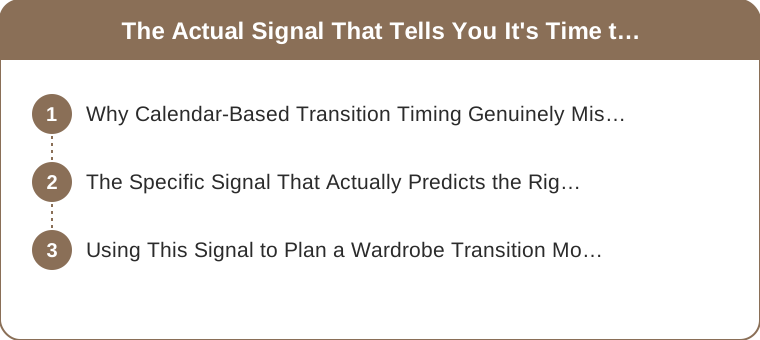
Why Calendar-Based Transition Timing Genuinely Misaligns With Actual Weather
Calendar dates are fixed and identical every year, but actual weather patterns genuinely shift from year to year and vary considerably by specific regional climate, meaning a wardrobe transition planned around a fixed calendar date will sometimes align reasonably well with actual conditions and will other times leave someone wearing clearly mismatched seasonal pieces for weeks against what the actual weather is doing.

The Specific Signal That Actually Predicts the Right Timing Better
Track the actual multi-week trend in daily high and low temperatures for a specific location rather than the calendar date itself, since a sustained trend — average daily temperatures consistently crossing a specific meaningful threshold over a two-to-three week window, rather than a single unusually warm or cold day — genuinely predicts that a real seasonal shift is underway considerably more reliably than any fixed date on a calendar.
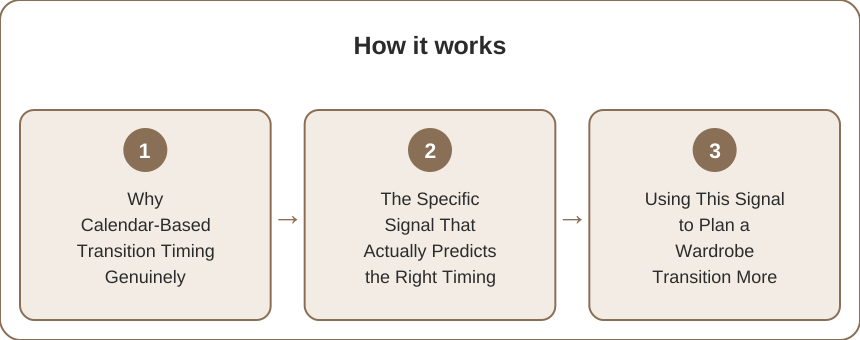
Using This Signal to Plan a Wardrobe Transition More Accurately
Watch the actual multi-week temperature trend for a specific location starting a few weeks before the calendar would typically suggest transitioning, and begin the actual wardrobe swap once that sustained trend genuinely crosses the relevant threshold, rather than committing to a full transition on a fixed date regardless of what the specific trend is actually showing that particular year.
Calendar-based wardrobe transition dates genuinely misalign with actual weather since weather patterns vary considerably by year and region while calendar dates stay fixed, but tracking the actual multi-week trend in daily high and low temperatures for a specific location — watching for a sustained shift across a meaningful threshold over two to three weeks rather than a single unusual day — predicts the right transition timing considerably more reliably, so beginning the wardrobe swap once that sustained trend actually appears, rather than on a fixed calendar date regardless of conditions, produces a more accurately timed transition.
Keep Reading
This article is for general styling and informational purposes only. Trends, sizing, availability and pricing may vary by brand and season.